Barcode Scanners for Business: The 2026 Buyer’s Guide
A good barcode scanner is the unsung hero of fast, accurate service. From retail checkouts to hospital wards and queue-driven service counters, scanners turn slow manual entry into an instant, error-free tap. This 2026 buyer’s guide explains how barcode scanners work, the main types, and how to choose the right one for your business technology stack.
If you run a busy counter, warehouse, or clinic, the right scanner speeds transactions, cuts mistakes, and supports the smooth flow that customers expect.
Why Does a Barcode Scanner Still Matter in 2026?
Manual data entry is slow and error-prone. A barcode scanner reads product, ticket, or ID codes in a fraction of a second, keeping lines moving and records clean.
Barcodes remain everywhere because they simply work. As the standards body GS1 notes, barcodes underpin global commerce, from retail SKUs to healthcare and logistics tracking. That universality makes scanners a safe, long-term investment.
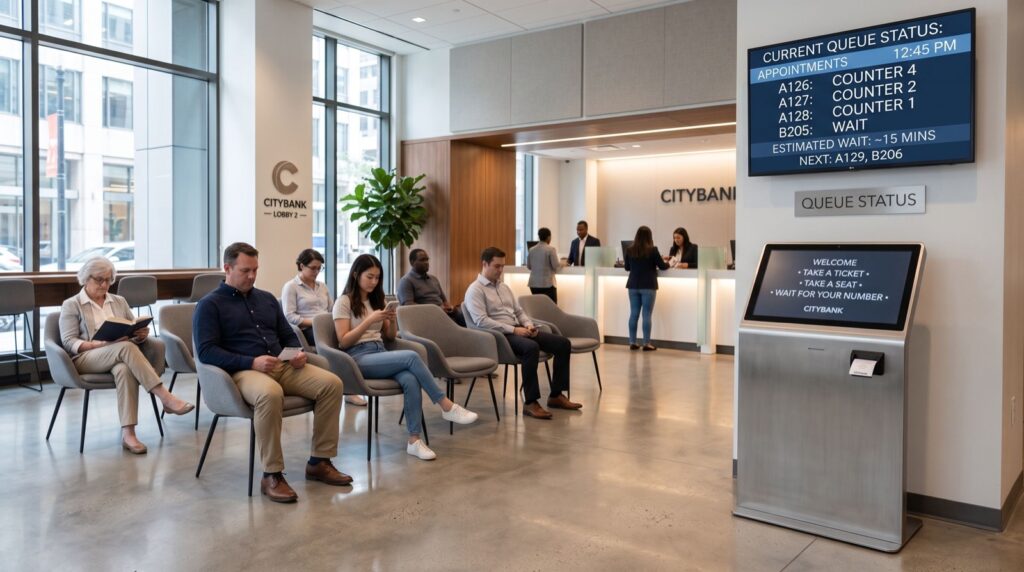
In service settings, scanners also connect to queue and token systems. A visitor’s ticket, appointment code, or ID can be scanned to pull up their record instantly, which trims service time at the counter.
Types of Barcode Scanners
Not all scanners suit every job. Picking the right form factor is the first decision.
- Handheld scanners — versatile and portable for retail and stockrooms.
- Presentation scanners — hands-free desk units for high-volume counters.
- Wireless scanners — freedom to move around large spaces.
- Fixed-mount scanners — embedded in kiosks and self-checkout.
- 2D imagers — read QR codes and codes from phone screens.
Comparing Two Popular Business Scanners
To make this concrete, consider two proven workhorses from Honeywell that suit different counter needs.
| Feature | Handheld Voyager | Presentation Orbit |
|---|---|---|
| Form factor | Handheld | Hands-free desktop |
| Best for | Retail, warehouse | Busy service counters |
| Screen barcode reading | Strong | Strong |
| Speed at fixed station | Good | Excellent |
For flexible, point-and-shoot scanning, the Honeywell Voyager XP 1470g is a dependable handheld choice that reads printed and on-screen codes with ease.
For a high-traffic counter where staff need both hands free, the Honeywell Orbit HF680 presentation scanner lets customers simply wave items or tickets across the reader, keeping the queue moving quickly.
How Scanners Fit Into Queue and Token Systems
Barcode scanning and queue management work beautifully together. When a customer takes a numbered token or books an appointment, that ticket carries a code.
At the counter, staff scan the code to instantly open the customer’s file, service history, or order. This removes manual lookup, cuts service time, and reduces errors that frustrate both staff and visitors.
The result is a tighter loop: check in, wait fairly, get called, and be served fast. Scanners are the small piece of hardware that makes that final step feel effortless.
Practical Integration Tips
- Choose scanners that read from phone screens for mobile tickets.
- Match the form factor to your counter layout and staff habits.
- Test scan speed under real lighting and volume conditions.
- Confirm compatibility with your POS, CRM, or queue software.
1D vs. 2D Barcode Scanners Explained
One of the most common buying mistakes is choosing the wrong scanning technology. The difference between 1D and 2D scanners decides what codes you can read and how future-proof your purchase is.
A 1D, or laser, scanner reads traditional linear barcodes, the familiar striped codes on packaging. These scanners are affordable and fast for retail SKUs, but they cannot read QR codes or codes shown on a phone screen.
A 2D imager, by contrast, reads both linear barcodes and two-dimensional codes like QR codes and Data Matrix. Critically, imagers also read codes from screens, which matters as mobile tickets and digital wallets become standard.
For most modern service counters in 2026, a 2D imager is the safer choice. It costs a little more upfront, yet it handles every code type your customers are likely to present, protecting your investment for years.
Total Cost of Ownership
Price is only part of the equation. Smart buyers weigh the full cost of owning a scanner over its lifetime.
- Durability: a rugged unit survives drops and cuts replacement costs.
- Warranty: longer coverage reduces surprise expenses.
- Downtime: a failed counter scanner stalls service and revenue.
- Support: local service means faster repairs and less disruption.
When you add these factors together, a slightly pricier but reliable scanner often costs less over three years than a cheap unit that fails under heavy use.
How to Choose the Right Barcode Scanner
Start with your environment. A warehouse needs rugged, wireless units, while a service counter benefits from a hands-free presentation model.
Next, consider the codes you scan. If customers show tickets on their phones, you need a 2D imager, since older laser scanners struggle with screens. Then weigh durability, warranty, and local support, because downtime at the counter is expensive.
Finally, buy from a supplier who can advise, install, and service the hardware. To source and set up the right equipment, work with trusted professionals who understand both retail and service-counter needs.
Frequently Asked Questions
What is the best barcode scanner for a busy counter?
A hands-free presentation scanner is usually best for high-traffic counters, because staff can keep both hands free while items or tickets pass over the reader. Handheld models suit environments where mobility matters more.
Can a barcode scanner read codes from a phone screen?
Yes, if it is a 2D imager. Modern imaging scanners read QR codes and barcodes directly from smartphone screens, which is essential for mobile tickets and digital loyalty cards.
Do barcode scanners work with queue management systems?
Absolutely. Scanning a token or appointment code instantly pulls up the customer’s record, speeding service and cutting manual lookup errors. Scanners are a natural partner to queue and token systems.
How long do business barcode scanners last?
Quality scanners often last several years with normal use. Choosing durable, well-supported models and following maintenance guidance protects your investment and minimizes counter downtime.
Conclusion
A reliable barcode scanner is a small investment that pays off every single day in 2026 through faster, more accurate service. Whether you pick a versatile handheld or a hands-free presentation model, matching the scanner to your workflow keeps queues short and customers happy. Pair the right scanner with a solid queue and token system, and you build a service counter that runs like clockwork. Ready to upgrade? Explore proven business scanners and give your team the speed they need.